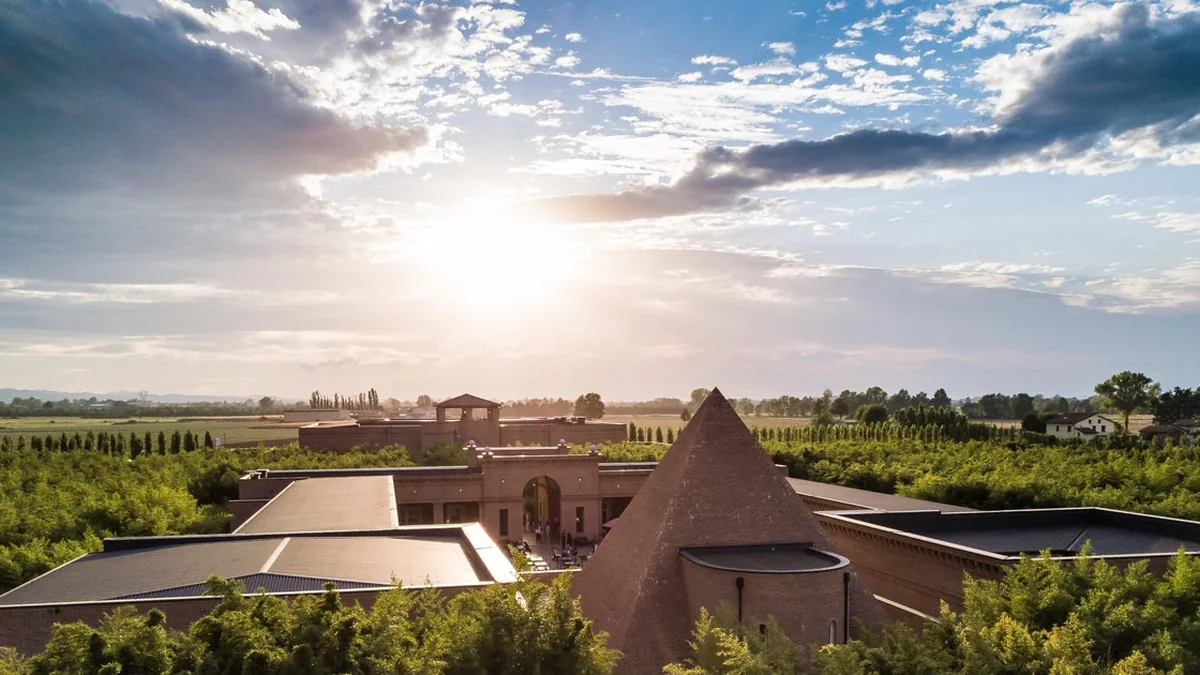
Booking choice: The QC Terme spa ticket, from $77 per person. Check dates Compare the options below
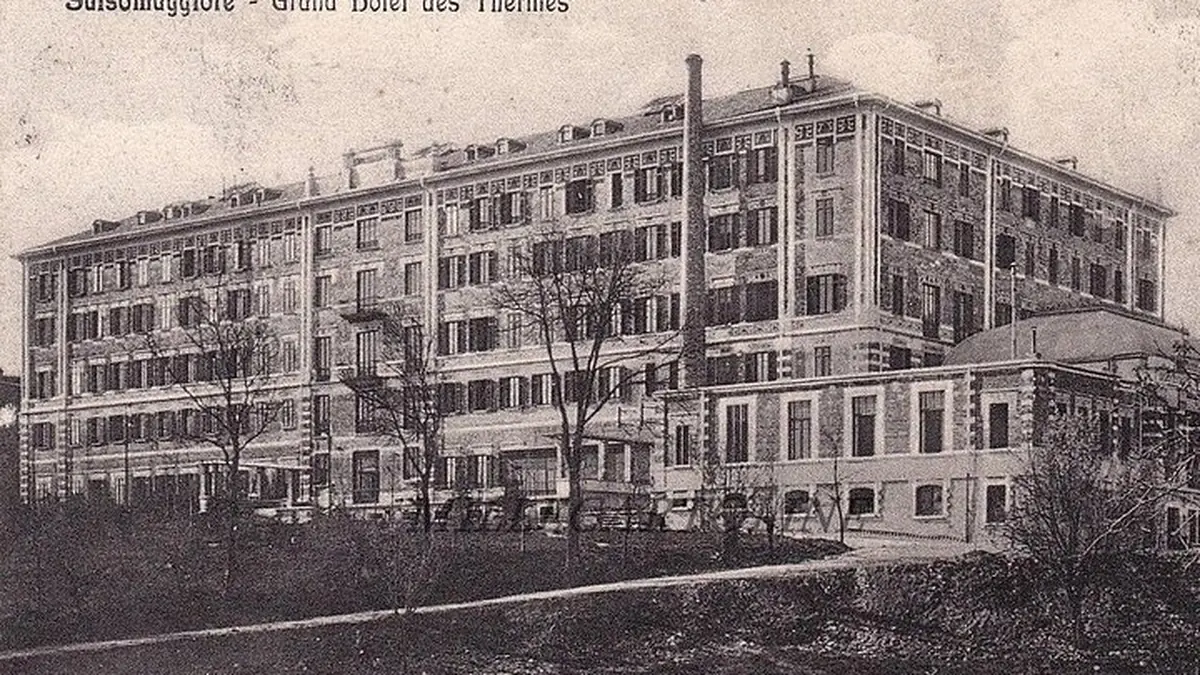
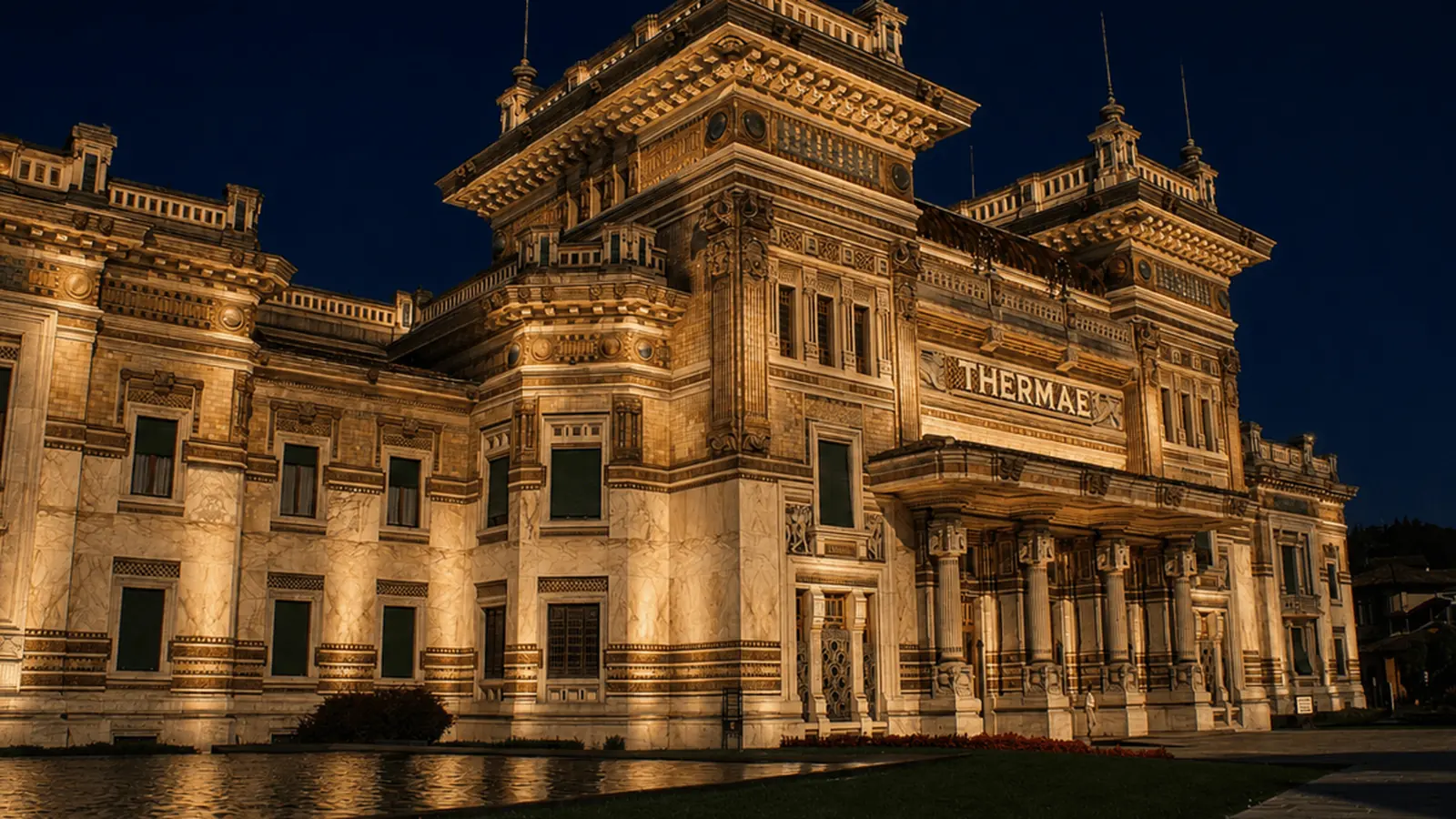
The Palazzo delle Terme Berzieri stands at the heart of Salsomaggiore Terme, west of Parma. It was planned from 1900, interrupted by the First World War and inaugurated on 27 May 1923, a Liberty palace with oriental touches decorated by Galileo Chini. After years of closure it reopened as QC Terme in December 2025.
Below: the salt that made the town, the physician it is named after, who designed and decorated it, why it closed and how it was restored. Facts come from English and Italian Wikipedia, the Terme di Salsomaggiore and press reports on the reopening.
The quick answer
The Berzieri is named after Lorenzo Berzieri, a 19th-century physician who promoted the cures of Salsomaggiore's cold, salty water. Planning began in 1900, the design was reworked in 1912 with Ugo Giusti, and after the First World War Galileo Chini completed the facade and decoration; it opened on 27 May 1923. It later fell into decline and closed for years, until Cassa depositi e prestiti bought it in 2021 and QC Terme reopened it on 19 December 2025, after a EUR 41 million restoration.
Why is Salsomaggiore a salt town?
Because of its water: cold, very salty water from deep wells, drawn for centuries to make salt, used among other things to cure Parma's hams and to salt Parmigiano Reggiano.
The Terme di Salsomaggiore describe the water as cold, hypertonic salso-bromo-iodic water with about 150 grams of salts per litre, drawn at 16 to 17 C, rich in iodine and bromine, and rust coloured from its iron salts. The spa grew in the 19th century under Duchess Marie Louise (Maria Luigia) of Parma; Italian Wikipedia dates the first authorised bathing establishment to 1847, when the ducal government gave permission.
Who was Lorenzo Berzieri?
A physician who promoted the curative use of Salsomaggiore's salso-bromo-iodic water in the 19th century; Italian Wikipedia dates his discovery of its healing properties to 1839.
English Wikipedia says he published case reports on the water in the 1840s. His name went on the great bathhouse and on the square in front of it, Piazza Lorenzo Berzieri. Before the present palace, the town had older bathhouses: a neoclassical rebuilding of 1857 and the Stabilimento Dalla Rosa of 1880 to 1883, which was demolished in 1968, according to Italian Wikipedia.
When was the Palazzo Berzieri built?
Planning began in 1900; the design was reworked in 1912, work began in 1914, stopped for the First World War, restarted after it and ended with the inauguration on 27 May 1923.
Sources differ on the details, so here is the timeline with its sources. Italian Wikipedia puts the cost at 23 million lire of the time.
| Year | What happened | Source |
|---|---|---|
| 1839 | Lorenzo Berzieri identifies the healing properties of the water | Italian Wikipedia |
| 1900 | Planning of a new bathhouse begins | English Wikipedia |
| 1912 | The design is reworked: Ugo Giusti, with Giulio Bernardini in the Italian account | English and Italian Wikipedia |
| 1914 | Building work begins | Italian Wikipedia |
| 1918 to 1919 | Work restarts after the war; Galileo Chini leads the decoration | English and Italian Wikipedia |
| 27 May 1923 | Inauguration | English and Italian Wikipedia |
| 2021 | Cassa depositi e prestiti buys the Terme | Italian Wikipedia |
| 19 December 2025 | Reopens as QC Terme | QC Terme |
| 27 January 2026 | Official inauguration of the restored palace | Cremonasera |
Who decorated the Terme Berzieri?
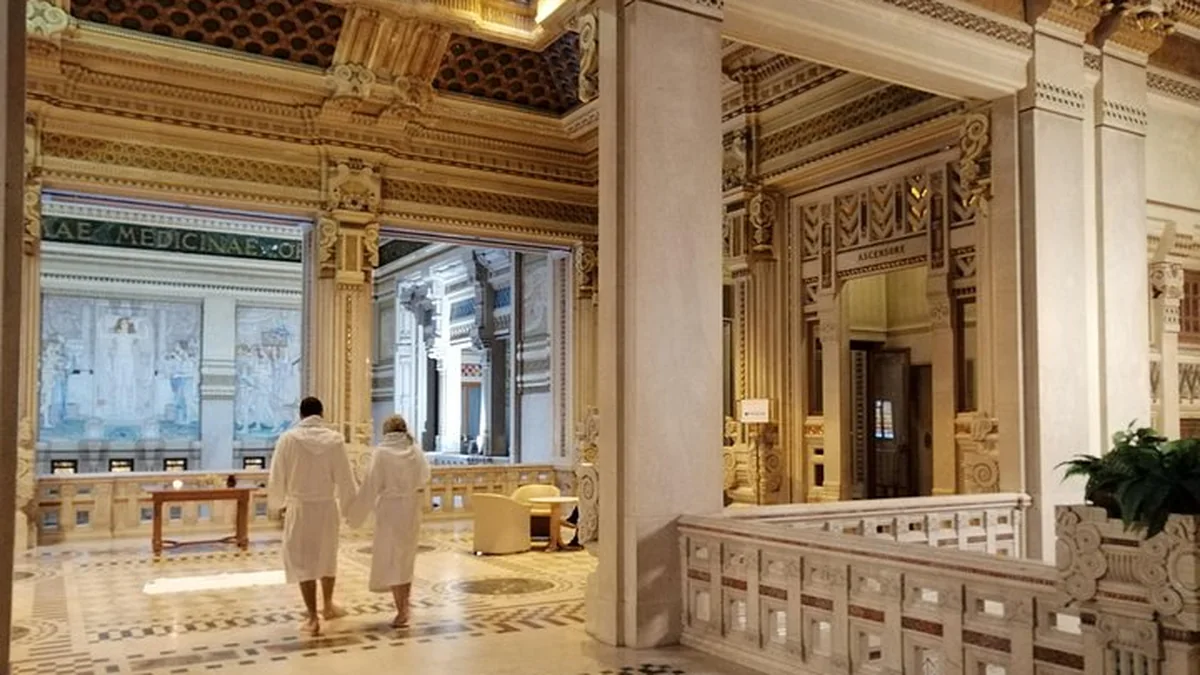
Galileo Chini, the Florentine artist, and his firm designed most of the ceramic wall decorations, windows and even furniture; Giuseppe Moroni decorated the entrance atrium.
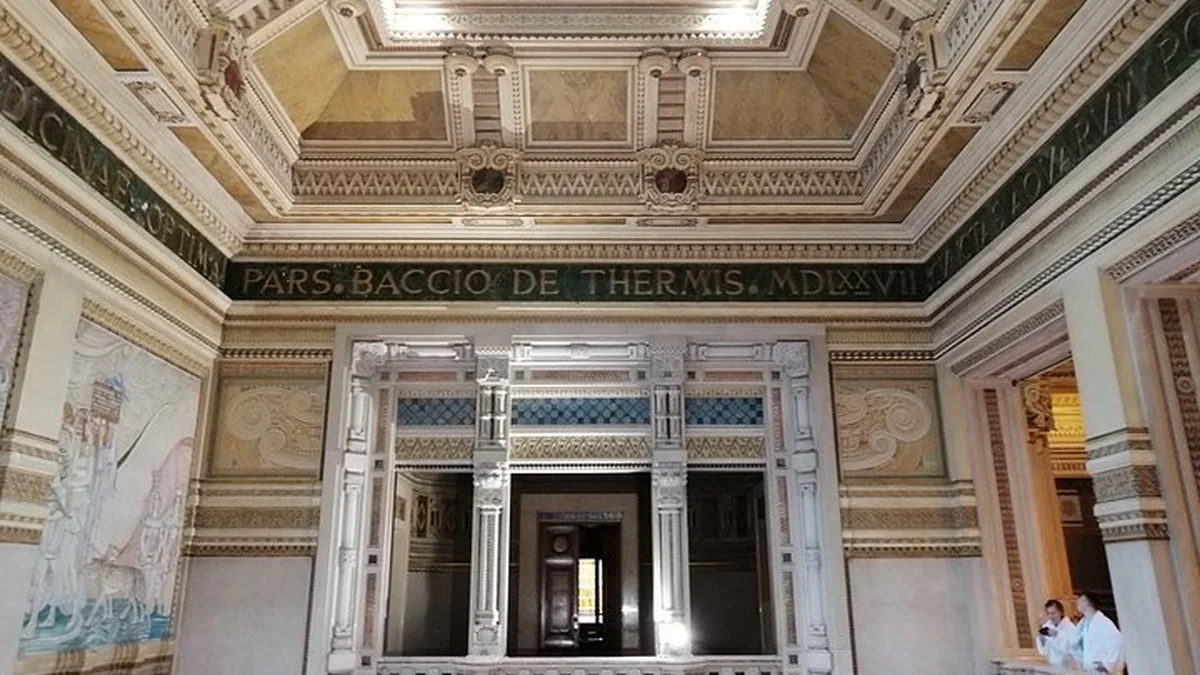
Chini painted Autumn and Spring on the grand double staircase, and Moroni decorated the atrium in marble, stucco and fresco, with his Triptych of Hygieia. Italian Wikipedia also names Francesco Aloisi and Guido Calori among the artists. Press reports on the restoration describe red Verona marble, Rapolano travertine and gold friezes. Chini and Ugo Giusti also designed rooms in the town's great hotel, now the Palazzo dei Congressi: see the Liberty walk.
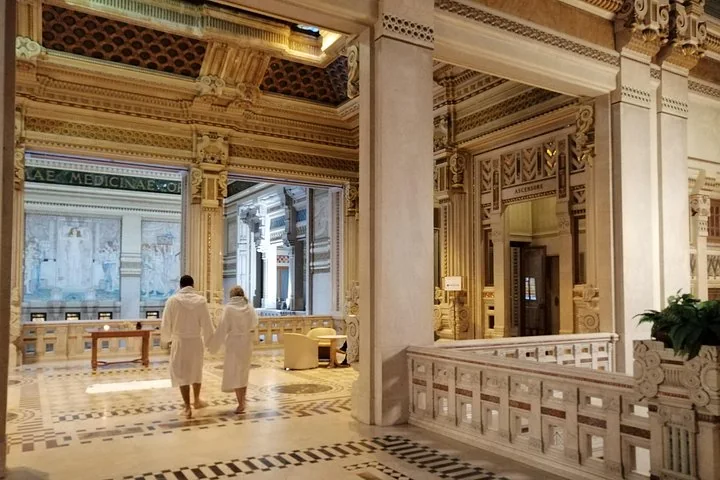
See the painted halls from the inside: the spa route runs through the historic palace.
Check dates for the QC Terme spa ticketWhat style is the Palazzo Berzieri?
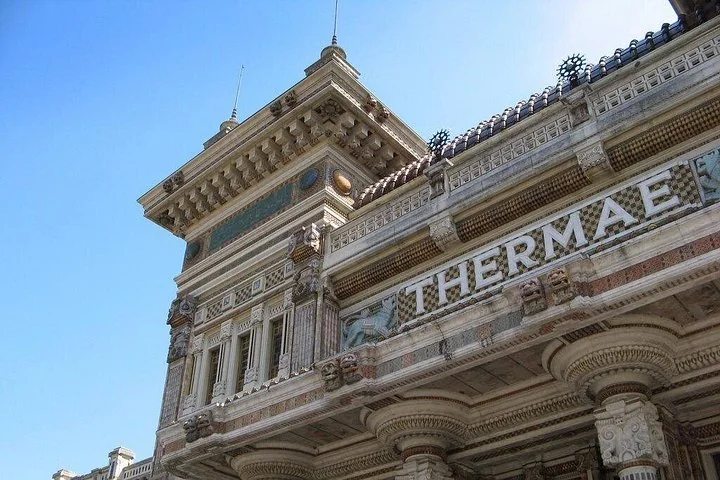
Liberty, the Italian Art Nouveau, with oriental touches: twin towers with onion-dome tops, polychrome ceramics, peacocks and odalisques.
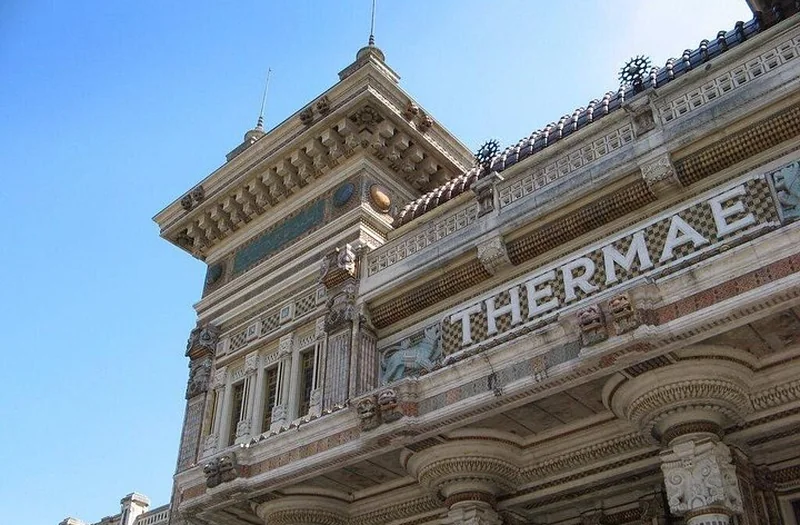
The town's tourist office calls it a unique example of thermal Art Deco, and the building is listed in the cultural heritage of Emilia-Romagna. The mix of styles reflects the years it took to build: planned in the Belle Epoque, finished after the war. Look up at the facade for the ceramic bands and the carved masks, and inside for the coffered ceilings and the Latin inscriptions on the friezes.
Why did the Terme Berzieri close?
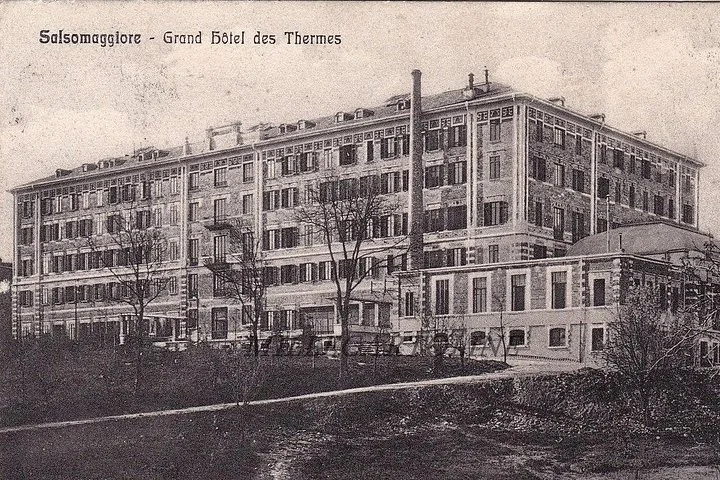
The grand clientele faded after the Second World War, and the spa company ran into debt: it entered a creditors' arrangement in 2015 and its property was put up for sale in 2018.
Italian Wikipedia traces the later steps: a 1997 law passed the state spas to the regions, and the company Terme di Salsomaggiore was founded in 1998. The Berzieri then stayed closed to the public for years. On 29 June 2021 Cassa depositi e prestiti, the Italian state investment bank, acquired it and entrusted its management to the Quadrio Curzio group, the family behind QC Terme. Medical cures continued elsewhere in town, at the Terme Zoja: see thermal cures in Salsomaggiore.
How was the Berzieri restored?
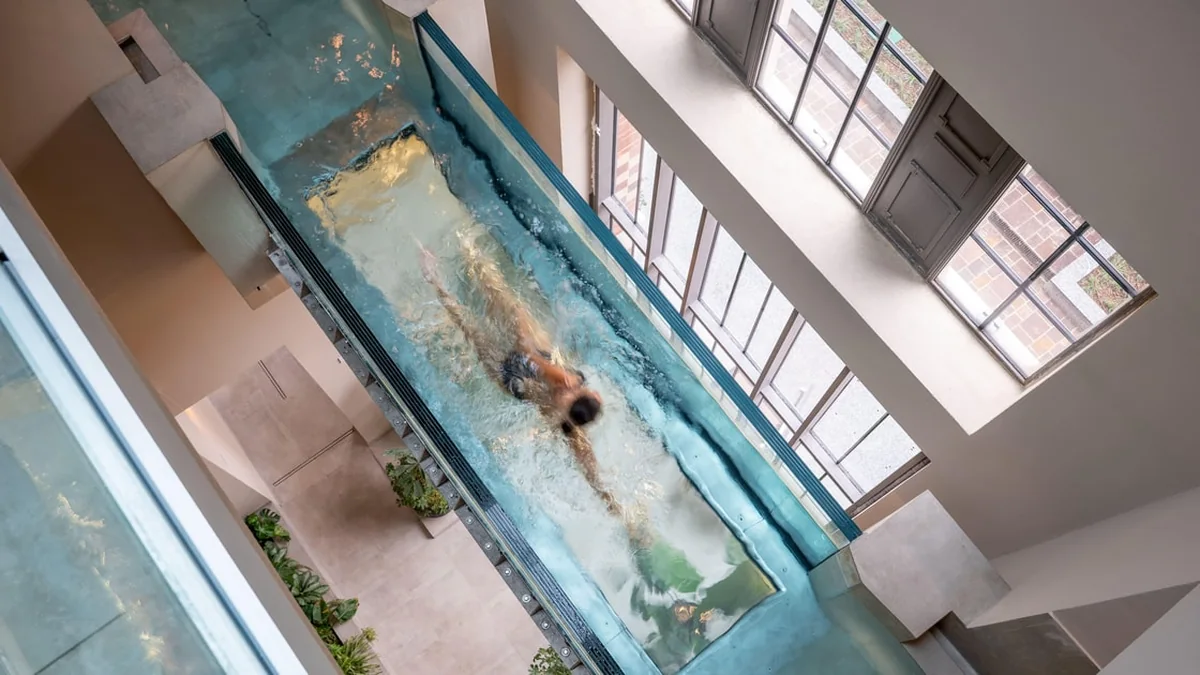
Works began in 2023 and cost about EUR 41 million, covering the palace and the former thermal power plant next door; together they give about 9,000 square metres of spa.
Press reports split the space into about 6,400 square metres in the palace and 2,600 in the former power plant, and some put the total investment above EUR 44 million. The historic building holds the reception, changing rooms, restaurant, saunas and steam baths; the power plant holds most of the pools, indoors and out. The spa opened on 19 December 2025, was officially inaugurated on 27 January 2026, and QC expects about 150,000 visitors a year. Prices and rules are in QC Terme prices and hours.
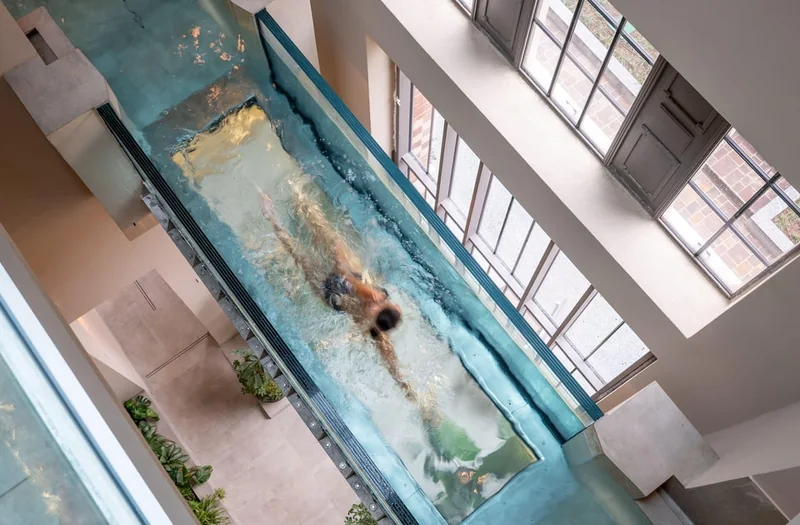
Warm pools and saunas in the restored palace, robe and towel included, with free cancellation up to 24 hours before.
Explore the QC Terme spa ticketCan you visit the Berzieri without a spa ticket?
Not that we could confirm: the interiors are part of the spa. You can admire the facade from Piazza Berzieri, where the guided Liberty walk begins.
The Liberty walk ($23, 1 hour 30 minutes, in Italian) meets in front of the Berzieri. The private Liberty and spa day ($238 per person) pairs about 4 hours in the spa with about 2 hours at the Palazzo dei Congressi; it is non-refundable and cannot be changed.
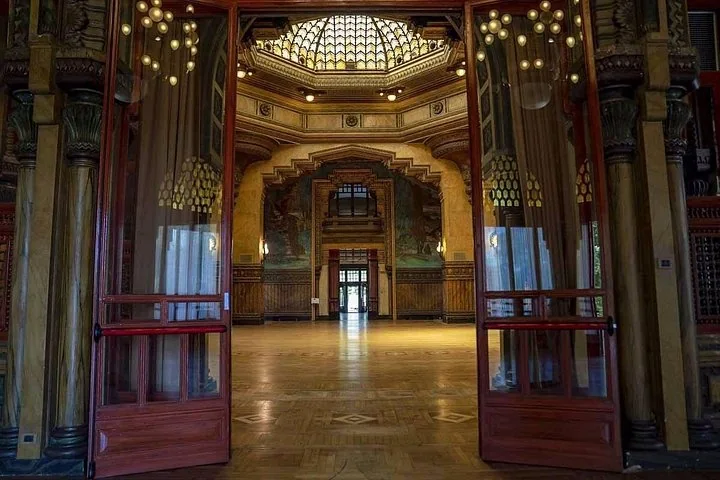
A private guide, a full spa ticket and the Palazzo dei Congressi. Non-refundable: book only when your date is certain.
Explore the private Liberty and spa dayFrequently asked questions
When was the Terme Berzieri built?
Planning began in 1900 and work in 1914; after a pause for the First World War it was inaugurated on 27 May 1923.
Who designed the Terme Berzieri?
Ugo Giusti reworked the design in 1912, with Giulio Bernardini according to Italian sources, and Galileo Chini completed the facade and decoration after the war.
Who was Lorenzo Berzieri?
A 19th-century physician who promoted the cures of Salsomaggiore's salso-bromo-iodic water.
When did the Terme Berzieri reopen?
On 19 December 2025, as QC Terme, after a restoration of about EUR 41 million.
Ready to book
Choose your day
Free cancellation up to 24 hours before on every option. Prices are from-prices in USD and move with the season.
QC Terme Salsomaggiore Spa Admission Ticket
- Entry to the QC spa in the Palazzo Berzieri and the former thermal power plant
- Bathrobe, towel and slippers
- Food, drinks, massages and treatments not included
Salsomaggiore Liberty and Belle Epoque Walk
- Guided walk in Italian with a licensed local guide
- Terme Berzieri, City Hall, Palazzina Warowland, Parco Corazza and the Palazzo dei Congressi
- Meet in front of Palazzo Berzieri, Piazza Lorenzo Berzieri 1